

You’ve been asking why there’s been nothing here about Geoff Leo’s CBC stories on the Dr. Goodenowe Restorative Health Centre in Moose Jaw.
The short answer is this is one of the hardest things to write that has ever landed on my desk.
I hate upsetting people. I am very aware that some of my own readers may decide that any attempt at nuance I make, can and probably will be interpreted as “defending a scam” or “snake oil” and I hate that feeling. That includes the two doctors, at least, in my audience who are going to be side-eying me for writing this.
I’ve consulted you both. You know how deeply your opinions matter to me. But you also know how obsessed I am with telling whole stories, not partial truths.
My purpose today is solely to establish a more fulsome narrative around what’s happening with this story – because the truth matters.
So please, hear me out.
ALS is devastating and the stories are heartbreaking and there’s no world in which I want to ever minimize that.
I am not interested in defending the indefensible or telling anyone how they should feel.
You know me better than that, I hope.
Let me be explicit about what this piece is and is not.
This is not:
an endorsement of the Moose Jaw Centre’s marketing strategy;
a claim that something “works” in the scientific or medical sense;
an attempt to convince you to feel a certain way about any of this.
This is:
an attempt to insert some crucial context that, for some reason, has been stripped out of the current public narrative;
a defence of ordinary Moose Jaw workers and caregivers who are being casually smeared;
a look at who is driving this media framing and what ideological ecosystem they come from;
an acknowledgment of the bleak reality of an ALS diagnosis and the kinds of choices that people in that situation are pushed toward.
You are absolutely free to come to your own conclusions about the Centre, the program, and Dayan Goodenowe himself.
What is bothering me is that many people are being asked to judge this situation on a cherry-picked caricature, not on the fuller story.
I’ve known Dayan Goodenowe for about a decade. People I highly respect worked for him in Saskatoon at his University of Saskatchewan laboratory; they spoke highly of him then and still do now.
They will also freely say he is incredibly intelligent, eccentric, stubborn and hard‑headed.

Human beings are allowed to be more than one thing at once.
But there is a vast swath of political history and context in Saskatchewan – including powerful Sask Party players and a long‑standing comfort with unregulated “innovation” in health care – that is missing from the current framing of Dayan Goodenowe and what’s happening in Moose Jaw.
That omission is not neutral.
Goodenowe chose to fight back. He has filed a defamation suit against CBC and Leo alleging falsehoods, context‑stripping and serious economic and reputational harm. Because that lawsuit is now before the courts, I’m not going to litigate all of those allegations here – they will be tested, properly, in front of a judge.
What I can say is that Goodenowe has also pushed back publicly on how Leo operates, including publishing full excerpts of interviews Leo conducted with him, to demonstrate Leo’s tone and approach - highly combative, aggressive and in my opinion, intimidating.
It would be naïve to pretend that this very public legal and reputational fight does not now colour Leo’s perspective of the stories he’s writing. Whether or not that meets anyone’s formal definition of a conflict of interest is something the legal process and CBC’s own standards will have to sort out, not me.
Meanwhile, the Centre itself employs more than 100 Moose Jaw residents and contracts with multiple local service providers. These are not faceless villains. They are working people providing day‑to‑day basic care.
Those residents have been called, by the Saskatchewan NDP, “garbage” and “grotesque” in local political rhetoric.
They do not deserve that.
There is another piece that has gone almost entirely unremarked on: Dayan’s family.
This isn’t a solitary man in a lab coat.
He comes from a huge, tightly‑knit, loyal AF extended family that numbers in the hundreds – people who live in Moose Jaw and across the province, who shop in the same stores, volunteer in the same churches and schools, and are now watching their name and their work being dragged through the mud.
When the NDP and others swing at this one facility, they are in practice swinging at a whole web of families as well - and they’ve lost every vote now, forever, from those people.
The case of Susie Sylvestri, the American ALS patient, has had her death exploited into a kind of morality play. There are holes and unanswered questions in that story that deserve careful, independent scrutiny – which, again, is now the job of regulators and the courts, not this newsletter.
The pain and grief are real; I am not discounting them. But the way partisan actors and media have chosen to deploy a dead woman’s story, to my eyes, increasingly resembles the kind of exploitation they claim to oppose.
I’m especially surprised that Jared Clarke, who fights for bodily autonomy for his own family, has taken such a hard line on what others should be “allowed” to do with their own.
None of this adds up to “nothing to see here,” but it does mean that if we are going to have a grown‑up conversation about what is happening in Moose Jaw, we need to go way back to the beginning.
One of the most common tropes in the coverage of this issue that I’ve seen is the idea that plasmalogens are some sort of woo‑woo that Dayan dreamt up in his garage.
They’re not.
Plasmalogens are a specific class of ether phospholipids – lipids that form part of cell membranes, especially in the brain, heart and nervous system. Reduced plasmalogen levels have been repeatedly associated in the scientific literature with cognitive decline, dementia, and a range of neurodegenerative and peroxisomal disorders.
Dayan Goodenowe was one of the people who pushed this field forward.
He trained as a chemist at the University of Saskatchewan and completed a PhD in medical sciences (psychiatry focus) at the University of Alberta.
Over roughly three decades he published peer‑reviewed papers on plasmalogen deficiency and dementia, proposing plasmalogen replacement as a logical therapeutic target. He also developed synthetic plasmalogen precursors such as PPI‑1011 and related compounds that can raise plasmalogen levels in blood and tissues in animal models.
This wasn’t happening in secret.
In 2015, The New York Times profiled Goodenowe and families of children RCDP with a rare, often‑fatal dwarfism syndrome caused by plasmalogen deficiency, and the hope they placed in Goodenowe and the company he founded and led.
Your takeaway from that should be, at least, that the underlying biochemistry is real, and that it has been taken seriously by mainstream researchers for years.
To present plasmalogens as a crank obsession, or “snake oil” is insulting and ignorant.
The part of Dayan’s story that almost nobody in Saskatchewan has been told is what happened to that RCDP drug after it was featured in the New York Times.
By the mid‑2010s, his company, headquartered at the University of Saskatchewan, had advanced at least two plasmalogen pharmaceutical candidates, including PPI‑1011 and later PPI‑1040, aimed at treating RCDP and possibly other conditions.
In 2019, the U.S. Food and Drug Administration granted orphan‑drug designation to PPI‑1040 for the treatment of RCDP. Orphan‑drug designation is a U.S. mechanism designed to encourage development of drugs for very rare diseases. It confers market exclusivity and can be extremely lucrative.
In principle, it’s a good thing.
Dayan believed the pharmaceuticals he was working on could have a much broader impact and was not interested in narrowing his research just to cash in.
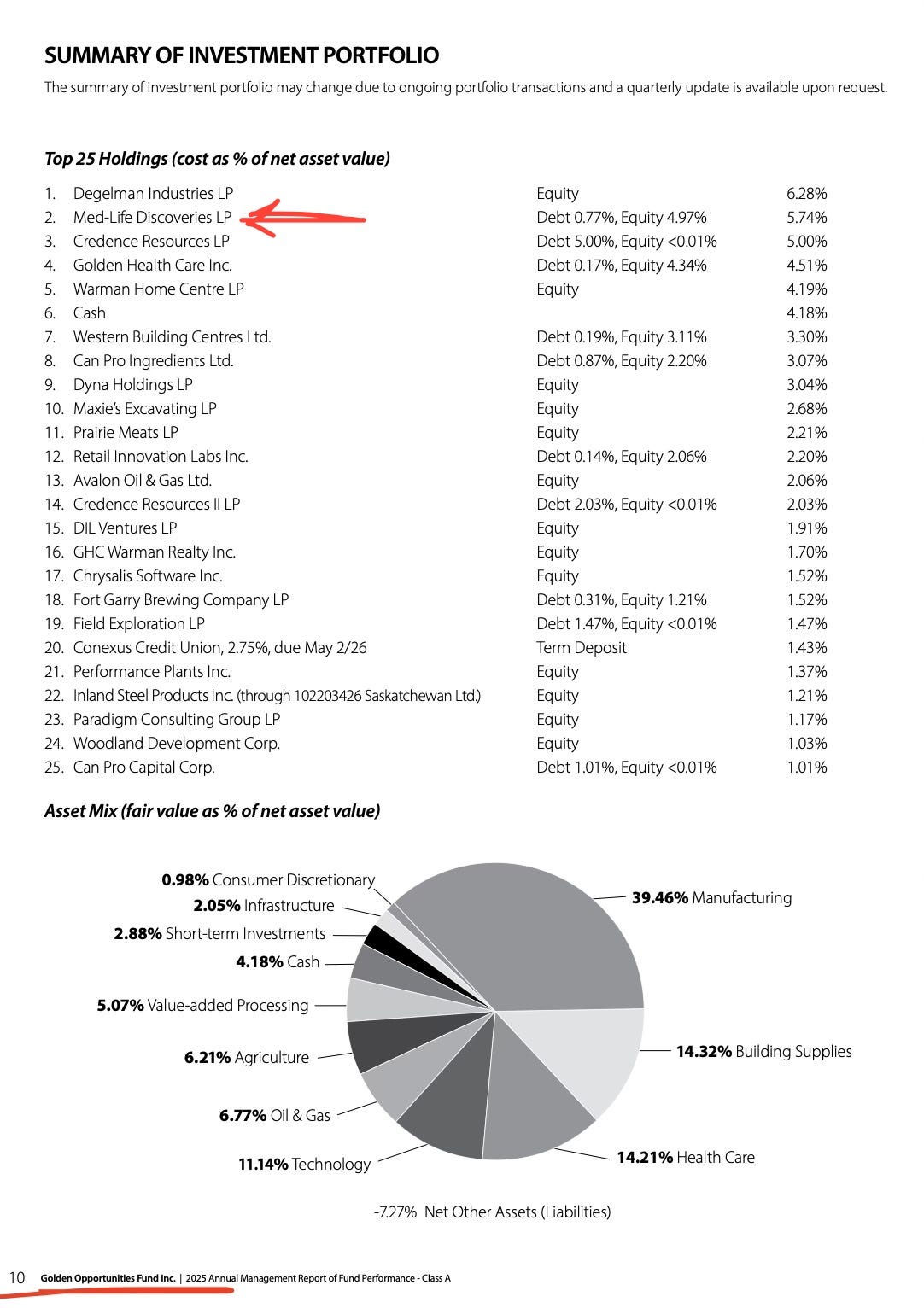
In 2015, his company at the U of S ran out of money. In early 2016, under court supervision, some of the company’s own shareholders and investors formed a new entity, Med‑Life Discoveries (MLD), and successfully bid to purchase all of its assets – including the plasmalogen replacement compounds and the patent portfolio.
Here’s the front page of Med-Life’s website today:


In other words: the science and the drug candidates that Dayan and his team had developed over many years were taken away from him and placed under entirely new ownership and control.


You don’t have to idealize Dayan to understand what that does to a founder.
His pharmaceutical drug program now marches forward under Med‑Life’s banner, not his. His life’s work is in the hands of very well‑connected Saskatchewan business figures. That is all on the public record.
Why that context has not featured in recent mainstream coverage is a question worth asking.
My point here is to explain why someone in his position might decide to leave the conventional pharmaceutical track and pursue a different model that he, not his investors, ultimately controls.
Eventually, Goodenowe moved to the United States and pivoted toward nutraceuticals and laboratory diagnostics.
There he developed high‑dose plasmalogen precursor supplements (sold as dietary products, not drugs) and a battery of metabolomic blood tests marketed to physicians and functional‑medicine practitioners. His successful US-based corporation has become a significant American manufacturer and distributor of supplements.
He appears regularly on American medical podcasts and in professional education settings pitching plasmalogen dysregulation as an upstream driver of a long list of age‑related and neurodegenerative diseases.
Over 2,500 physicians and practitioners globally use his plasmalogen supplements in their routine care.
Who do you think is referring many of the ALS clients to the Moose Jaw Centre?
Again: the question of how those products are marketed and what claims are made where and by who is now before regulators and the courts. I am not going to pre‑judge findings that haven’t been made.
However, the public pile‑on, the human reality of the Centre itself has been almost entirely erased.
Whatever you think of Dayan or his claims, the Moose Jaw facility is not deserving of the treatment it is receiving, particularly from the Saskatchewan NDP, who – last I checked – sure as hell need votes in Moose Jaw if they ever plan on forming government.
The Centre is a physical place that, at last count, employed more than 100 people and contracts with a range of local Moose Jaw service providers. This isn’t a set of talking points; these are human beings who cook meals, help clients dress, drive them to appointments, and sit with them on the bad nights.
They are not the ones writing brochures or deciding what price to charge. They are, in many cases, new Canadians sending money home, or Moose Javians who chose this work because they wanted to care for people.
They have now been publicly associated with words the Saskatchewan NDP are hurling at them, like “garbage” and “grotesque.” They are being cold‑shouldered in the community, whispered about at church, and in some cases directly and aggressively confronted.
Whatever view you take of the Centre’s business model, that is wrong.
If you want to go to war with a program, go to war with a program.
Don’t dehumanize the cleaners and caregivers and line cooks along the way.
ALS (amyotrophic lateral sclerosis) is a fatal neurodegenerative disease. It is not surprising that people reach for hope – and it should not, on its face, be considered “evil” to offer it to them.
Over the past decade, an entire global marketplace has grown around the premise of trying to treat this hellacious disease. In Saskatchewan, I appreciate that concept is essentially sacrilegious.
Their bodies, their money - their business.
Some of these efforts are careful and ethically run. Some are not. Almost all of them depend on the same basic reality: that conventional systems give ALS patients a diagnosis, perhaps a drug or two, and then, for the most part, send them home to die.
The ethical question is not whether ALS patients should be allowed to seek - and pay - for other options. They already are, everywhere. The question is what guardrails we put around those options, how honestly they are presented, and how we talk about the people who choose them.
After the first CBC story ran, I spent time at the Centre because I needed to understand it for myself.
I chatted with several ALS clients.
They were not jabbering fools. They understood their prognoses.
They each told me, unequivocally, that they did not feel coerced into being there.
They’d seen Leo’s stories and did not feel “cheated” in the sense that CBC implies. They were adults, with families, who had made a conscious decision to spend some of their money and time on a program that offered them daily attention, structured routines, and a narrative of possible improvement rather than the slow suffocation of waiting to die.
What the clients I spoke to kept coming back to was the difference between being in a place oriented around them and their disease – even if that place was imperfect – and being sent home with a brochure on dying, which they already know.
This is not data. It is not a randomized trial. It is simply what ALS patients told me when I asked them, outside the glare of television cameras.
You can hold that alongside other former participants who have since said they felt misled or that their money was wasted.
Both sets of experiences are valid and you have no right to discount one over the other.
It matters who is telling you this story and where they themselves sit in the political and ideological landscape.
Geoff Leo is a senior CBC investigative journalist with Michener and Canadian Screen Award credentials and a long track record of complex Saskatchewan and national investigations. He is now personally named in the Centre’s defamation suit. CBC will have its chance to defend the reporting in court. That’s how it should be.
Because of that live litigation, I’m not going to speculate further about motives; that will all be argued, in detail, by people whose job it is to do so.
On the political side, there is a reality the Saskatchewan NDP seems not to have thought through.
Moose Jaw is a community.
It is Dayan’s hometown.
It is where many members of his very large extended family live – a tight, multigenerational network that numbers in the hundreds. It is where the Centre’s staff live and worship and raise their kids.
When the NDP chooses language like “garbage” and “grotesque” and aims it at this facility, they are not just attacking a program; they are inflicting real emotional and social damage on an entire local ecosystem of families and workers.
That may play well with a certain rabid leftwing online audience in the short term.
On the ground in Moose Jaw, it is the kind of wound that does not heal quickly – and it is hard to see how a party that has done this much collateral damage to local people around one family and one facility expects to be seriously considered there on election day ever again.
So where does that leave us?
Right now, lawsuits are active, regulatory bodies are reviewing, politicians are posturing and media organizations are digging in. A lot of what has been said on all sides will eventually be weighed in court. That is where questions about specific statements, marketing claims and individual responsibility belong.
My role, and the reason I finally wrote this, is narrower but, I hope, still useful.
I am only asking you to sit with a bigger picture.
To sit with the fact that the man at the centre of this storm is a scientist whose work now underpins an FDA‑designated program he no longer controls, after his company’s assets were swept into other, more powerful Saskatchewan hands.
To sit with the fact that the people working at his Moose Jaw Centre are neighbours and newcomers who are being significantly harmed by the current dialogue and did not sign up to be props in Jared Clarke’s morality play.
To sit with the fact that terminally ill people will continue to seek out self‑directed, last‑chance programs as long as mainstream systems offer them so little, and that their choices are not ours to judge.
And to sit with the reality that the loudest voices shaping this story – journalists, politicians, activists, culture‑war entrepreneurs – have agendas of their own: political, ideological, personal and legal.
You do not have to agree with Dayan Goodenowe, or with his choices, or with mine.
But until the courts and regulators have finished their work, and until more facts are on the table, I would ask you to hold your judgment with just enough generosity to allow for the copious amounts of complexity and background that is being exploited through omission.
All I want is for you to have more information about what is happening around this family, this facility and this city, which is part of a much, much bigger picture than what fits into a single, neatly packaged story.

Thanks for providing a wider lens Tammy - appreciated reading this!